


When you walk into a luxury hotel room and feel instantly at peace — the soft filtered light, the complete darkness when you close the curtains, the elegant drape of fabric — that’s no accident. Hotels invest heavily in their window treatments because curtains do a lot more than just look pretty. They control light, ensure guest privacy, manage room temperature, and define the overall aesthetic of the space.
In this article, we break down exactly what types of curtains hotels use, why they choose them, and what makes hotel-grade curtains different from what you’d find in a regular home.
Why Hotel Curtains Are Different From Regular Curtains
Hotels have very specific requirements that regular residential curtains simply can’t meet. A hotel curtain needs to:
- Block light completely for guests sleeping in different time zones
- Withstand daily use without losing shape or color
- Be easy to clean and maintain at an industrial scale
- Match the hotel’s interior design and brand identity
- Meet fire safety and building code regulations
This is why hotels work with specialized hotel curtain suppliers who understand the commercial requirements of the hospitality industry.
The Most Common Types of Curtains Used in Hotels
1. Blackout Curtains
Blackout curtains are arguably the most essential curtain type in any hotel room. These are thick, tightly woven curtains — often with a special lining — that block out nearly 100% of external light. They’re critical for:
- Guests traveling across time zones who need to sleep during the day
- Rooms facing east or west where sunlight can be intense in the mornings and evenings
- Conference rooms and meeting spaces where presentations require a dark environment
Hotel-grade blackout curtains are typically made from heavy polyester or a polyester-cotton blend with a foam or thermal backing. The lining isn’t just about darkness — it also adds insulation, helping the room stay cooler in summer and warmer in winter, which directly impacts energy costs for the hotel.
In the UAE and GCC region, blackout curtains are especially popular given the intense sunlight and extreme heat. Hotels in Dubai, Abu Dhabi, and Qatar use heavy blackout treatments almost universally.
2. Sheer / Voile Curtains (Day Curtains)
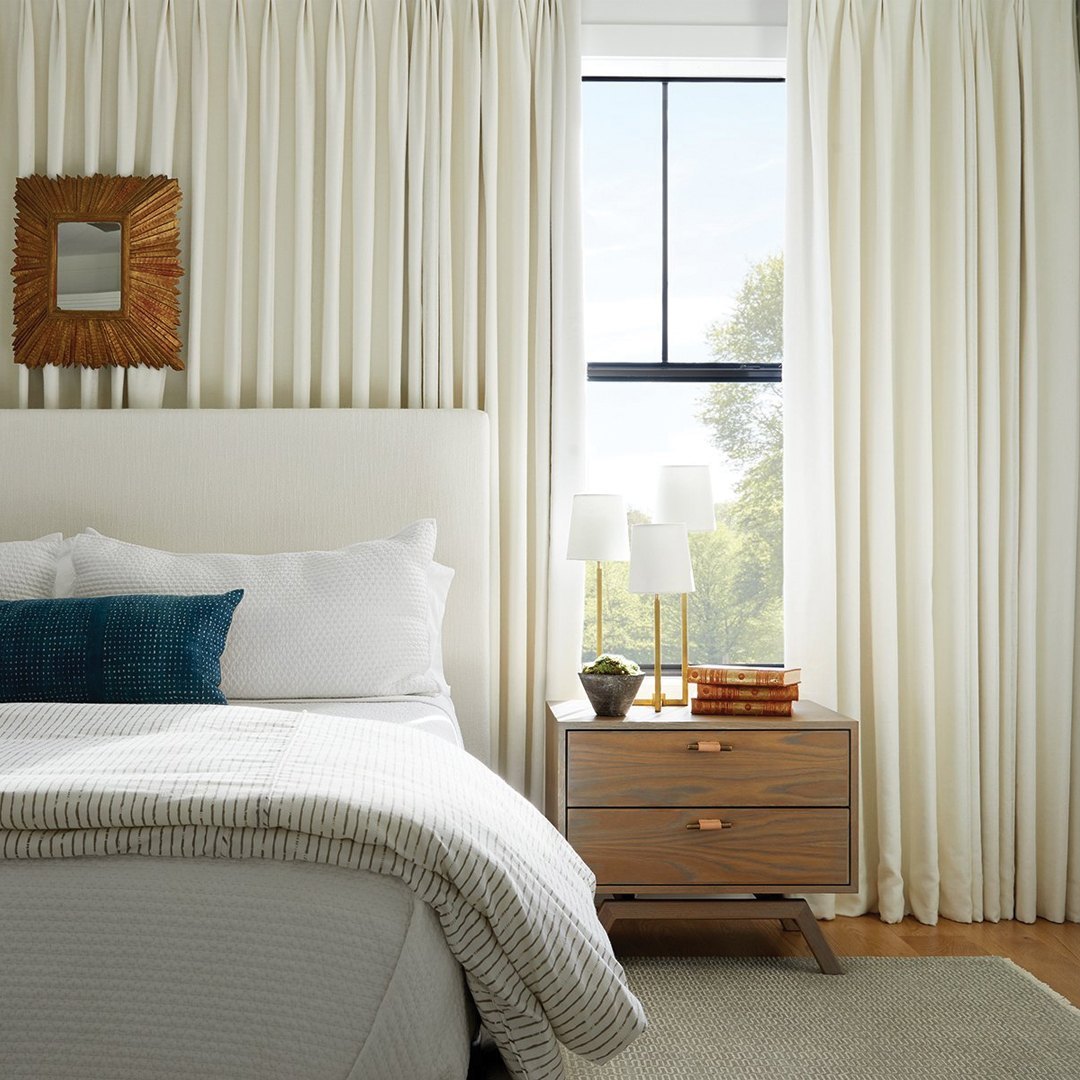
Almost every hotel room has a two-layer curtain system: a thick blackout curtain paired with a lighter sheer or voile curtain. The sheer layer filters natural light softly, allowing a bright but comfortable ambiance during the day while maintaining a degree of privacy.
Sheers are usually made from lightweight polyester, linen blends, or voile fabric. They give the room an airy, elegant look when the blackout curtains are pulled back. Hotels love this layered approach because it gives guests flexibility — full darkness, soft diffused light, or a clear view — all with a simple pull of the curtain.
3. Jacquard Curtains
For luxury and boutique hotels, jacquard curtains are a popular choice. Jacquard fabric has a woven pattern built directly into the textile (rather than printed on), which gives it a rich, textured look that screams quality. Think damask patterns, floral motifs, or geometric designs that add visual depth to the room.
Jacquard curtains are heavier and more expensive than plain weaves, making them a statement piece for premium properties. Five-star hotels in particular tend to use jacquard or brocade curtains in their suites and lobbies where visual impact matters most.
4. Window Curtains (Standard Room Curtains)
Standard window curtains are the workhorses of hotel rooms — especially in 3-star and 4-star properties. These are typically floor-to-ceiling curtains in neutral tones (beige, cream, grey, or muted blues/greens) that complement the room’s color palette without being too distracting.
Hotels prefer floor-length curtains because they make rooms appear larger and more luxurious. The fabric is usually mid-weight polyester or a polyester-linen blend — durable enough for daily handling but soft enough to drape beautifully.
5. Shower Curtains
Don’t overlook the bathroom. Hotels that use bathtub/shower combos rely heavily on shower curtains that are waterproof, mold-resistant, and easy to clean. Hotel shower curtains are typically made from PEVA, vinyl, or polyester with a water-repellent coating.
The key difference between hotel shower curtains and home ones is durability and hygiene standards. Hotels need curtains that can be washed frequently without shrinking, fading, or developing mildew. Many hotels also use a dual system: a decorative fabric outer curtain with a plain plastic liner that takes the water impact.
Key Fabrics Used in Hotel Curtains
Polyester — The most widely used fabric in commercial hotel curtains. It’s durable, wrinkle-resistant, color-fast, and easy to clean. Most blackout and room curtains are polyester-based.
Cotton-Polyester Blends — Offer the softness of cotton with the durability of polyester. Popular in mid-range hotels that want a natural feel without sacrificing practicality.
Jacquard Weaves — Used in luxury hotels for their decorative patterns and premium appearance.
Velvet — Occasionally used in ultra-luxury properties, velvet curtains add a theatrical, high-end look. They’re excellent at blocking light and sound but require more maintenance.
Linen Blends — More common in resort and boutique hotels with a natural, relaxed aesthetic. Linen drapes beautifully but wrinkles easily, so it’s often blended with polyester for hotel use.
What Makes a Good Hotel Curtain Supplier?
Hotels don’t just pick any curtain off the shelf — they work with manufacturers who can deliver consistent quality at scale. A reliable hotel curtains supplier needs to offer:
- Bulk manufacturing with consistent quality across hundreds or thousands of units
- Custom sizing to fit non-standard window dimensions
- Flame-retardant and fire-safe fabric options to meet hospitality regulations
- A range of fabric options and colors to match different interior designs
- Reliable lead times and delivery for large hotel projects
For hotels in the UAE and GCC region, suppliers like Deira Trading Center specialize in hotel-grade textile manufacturing — supplying blackout curtains, window curtains, and shower curtains at commercial scale with custom options for hospitality projects.
Hotel Curtain Trends in 2025
The hospitality design world is seeing a few clear curtain trends right now:
- Motorized / Smart Curtains — Automated curtain systems that guests can control via a room tablet or phone app. Increasingly common in 5-star properties.
- Sustainable Fabrics — Hotels are increasingly sourcing curtains made from recycled polyester or organic cotton as part of their sustainability commitments.
- Minimalist Neutral Tones — Clean whites, off-whites, and warm greys dominate modern hotel design, replacing the heavy patterned drapes of earlier decades.
- Thermal Lining — Energy efficiency is a priority, so thermally lined curtains that help regulate room temperature are increasingly standard.
Final Thoughts
Hotel curtains are a serious business decision — not just a decorative one. The right curtains improve guest comfort, reduce energy costs, meet safety standards, and reinforce the hotel’s brand identity. From heavy blackout curtains that guarantee a perfect night’s sleep to elegant window curtains that set the mood during the day, every choice matters.
If you’re in the hospitality business and looking for a reliable curtain manufacturer in the UAE, Deira Trading Center offers custom hotel-grade curtains with bulk order capacity, flame-retardant fabric options, and delivery across the GCC. Get a free quote here.