


If you’ve ever shopped for bed sheets, towels, or upholstery fabric, you’ve likely come across the term thread count. It’s printed proudly on packaging, often in bold numbers like “300” or “1000,” suggesting that higher is always better. But what does thread count actually mean, and more importantly, how do you measure it?
As a textile manufacturer based in the UAE serving customers across the Middle East, we understand that thread count is one of the most misunderstood specifications in the textile industry. Many buyers assume a higher number automatically means better quality, but the reality is far more nuanced. In this article, we’ll break down exactly what thread count is, how it’s calculated, and why it shouldn’t be the only factor you consider when choosing fabric.
What Is Thread Count?
Thread count refers to the number of horizontal and vertical threads woven together in one square inch of fabric. These threads run in two directions:
- Warp threads – the lengthwise threads held taut on the loom
- Weft threads – the threads woven horizontally through the warp
To calculate thread count, you simply add the number of warp threads and weft threads within a one-inch square of fabric. For example, if a fabric has 100 warp threads and 100 weft threads in that square inch, the thread count is 200.
This measurement is most commonly associated with cotton bedding and linens, though it can apply to other woven fabrics as well.
Also read: What Is the Best Thread Count for Sheets?
How Is Thread Count Actually Measured?
The Basic Formula
The standard formula for measuring thread count is straightforward:
Thread Count = Number of Warp Threads + Number of Weft Threads (per square inch)
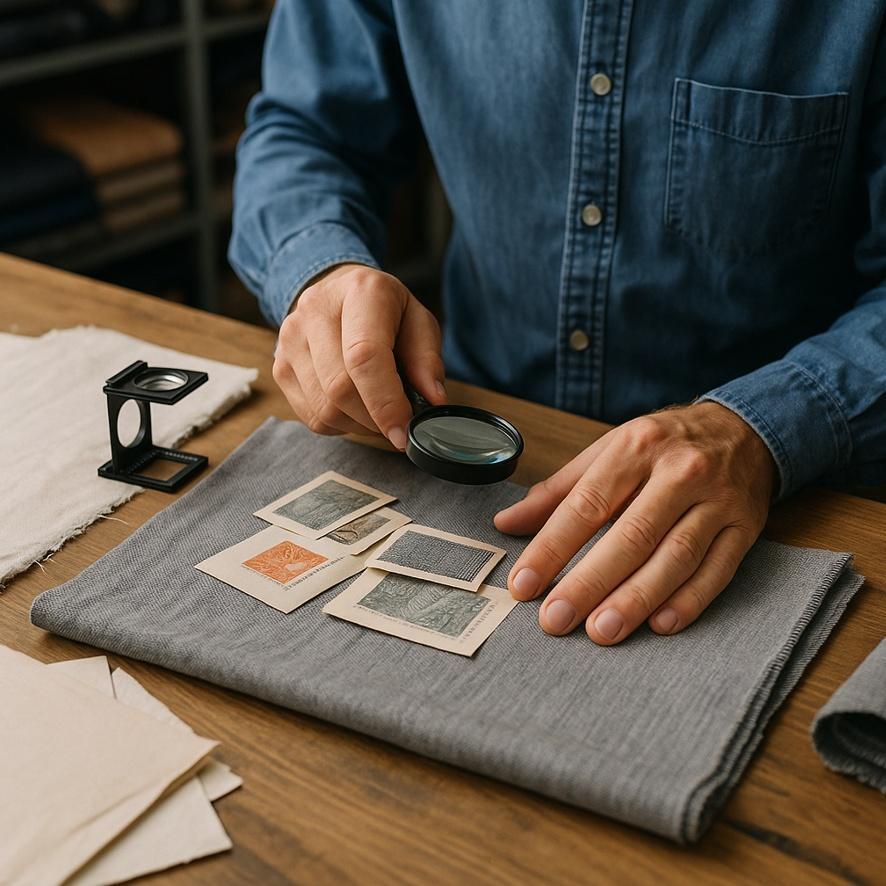
Manufacturers use a special magnifying tool called a pick glass or linen tester to count threads accurately. This tool isolates a one-inch square section of fabric, allowing technicians to count each individual thread running in both directions.
Step-by-Step Measurement Process
- Select a sample – A one-inch square swatch is cut or marked from the fabric
- Use a pick glass – This magnifying tool is placed over the fabric to make individual threads visible
- Count warp threads – Count all vertical threads within the square inch
- Count weft threads – Count all horizontal threads within the same square inch
- Add the totals – Combine both counts to get the final thread count number
This process must be repeated across multiple sections of the fabric to ensure consistency, since weaving irregularities can affect the count in different areas.
Industry Standards and Testing
Reputable textile manufacturers follow standardized testing methods, such as those outlined by the American Society for Testing and Materials (ASTM). These standards ensure that thread count claims are accurate and verifiable, rather than inflated marketing numbers.
In the UAE and broader Middle East market, quality-conscious manufacturers also test fabric under controlled humidity and temperature conditions, since these factors can slightly affect thread dimensions and, consequently, count accuracy.
Why Thread Count Numbers Can Be Misleading
The Multi-Ply Thread Trick
One of the biggest issues in the textile industry is the use of multi-ply threads. Some manufacturers twist two or three thinner threads together and count each strand separately, artificially inflating the thread count number.
For example, a fabric using 2-ply threads might be marketed as having a thread count of 600, when in reality, it only has 300 genuine single threads woven together. This practice is common and technically not illegal, but it can mislead consumers who assume higher numbers always mean higher quality.
Diminishing Returns Above Certain Counts
Contrary to popular belief, thread count doesn’t increase indefinitely with quality. Most textile experts agree that:
- 180-200 thread count is considered a basic, everyday fabric
- 200-400 thread count offers a noticeable improvement in softness and durability
- 400-800 thread count represents high-quality, luxury fabric
- Above 800 often involves multi-ply threads or thinner, weaker single threads packed tightly together
Once thread count exceeds roughly 400-500 with genuine single-ply threads, physical limitations of weaving make it difficult to fit more threads into a square inch without compromising fabric strength.
Factors That Matter More Than Thread Count
Fiber Quality
The type and quality of cotton fiber used matters far more than the thread count number. Egyptian cotton and Pima cotton, known for their long fibers (called long-staple cotton), produce stronger, softer, and more durable fabric than lower-quality short-staple cotton—regardless of thread count.
Weave Type
Different weaving techniques significantly affect fabric feel and performance:
- Percale weave – A simple, crisp, one-over-one-under weave that creates a matte, breathable finish
- Sateen weave – A four-over-one-under weave that creates a silky, lustrous surface
- Twill weave – A diagonal pattern weave often used for durability
The weave type affects how the fabric feels and performs, independent of thread count.
Yarn Quality and Finishing
The spinning process, thread uniformity, and finishing treatments (like mercerization) all contribute to the final quality of the fabric. Two fabrics with identical thread counts can feel completely different based on these factors.
Also read: Does Thread Count Matter on Sheets?
Why This Matters for Buyers in the Middle East
The Middle East, including the UAE, Saudi Arabia, and neighboring countries, has a growing demand for premium home textiles and hospitality-grade linens. Hotels, resorts, and households alike often prioritize thread count when making purchasing decisions.
Understanding how thread count is measured—and its limitations—empowers buyers to make smarter choices. Instead of focusing solely on the number, savvy consumers and business buyers should ask about:
- Cotton origin (Egyptian, Pima, or regional cotton)
- Single-ply vs. multi-ply construction
- Weave type (percale or sateen)
- Certifications confirming fabric authenticity and quality standards
How We Approach Thread Count as a Manufacturer
As a UAE-based textile manufacturer, we prioritize transparency in our thread count claims. Our fabrics are tested using standardized methods, and we clearly disclose whether our threads are single-ply or multi-ply. We believe informed customers make better long-term partners, whether they’re sourcing linens for hospitality projects, retail distribution, or personal use.
We also focus heavily on fiber quality and weave construction, ensuring that our fabrics perform well beyond just their thread count number. This holistic approach to quality has helped us build trust with clients across the Middle East region.
Conclusion
So, how do you measure thread count? At its core, it’s a simple calculation: counting the warp and weft threads within one square inch of fabric using specialized tools like a pick glass. However, as we’ve explored, the number itself only tells part of the story.
Multi-ply threads, fiber quality, and weave type all play significant roles in determining the true quality and feel of a fabric. As a buyer—whether you’re purchasing bedding for your home or sourcing linens for a hospitality business—it’s essential to look beyond the thread count label and consider the complete picture.
At our UAE-based textile manufacturing facility, we’re committed to producing fabrics that deliver real quality, not just impressive numbers. If you’re looking for premium textiles backed by transparency and craftsmanship, we invite you to explore our range of products designed specifically for the Middle East market.
Looking for premium bed covers? Deira Group is a leading Bed Covers Manufacturer in the UAE. Get a free quote today.