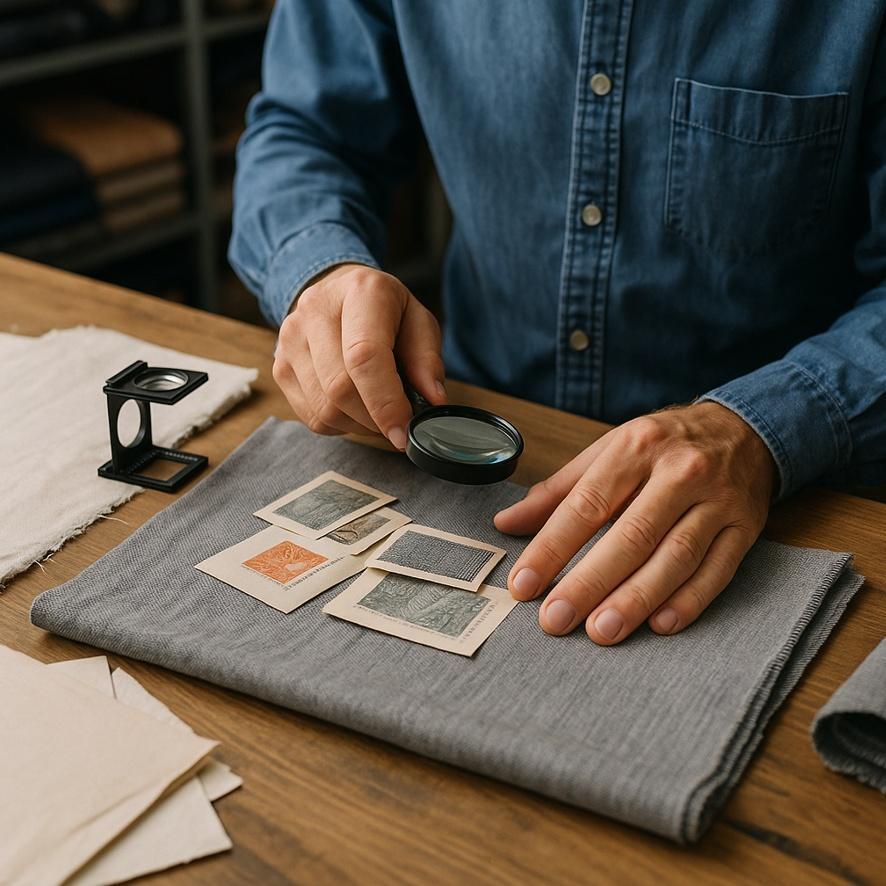



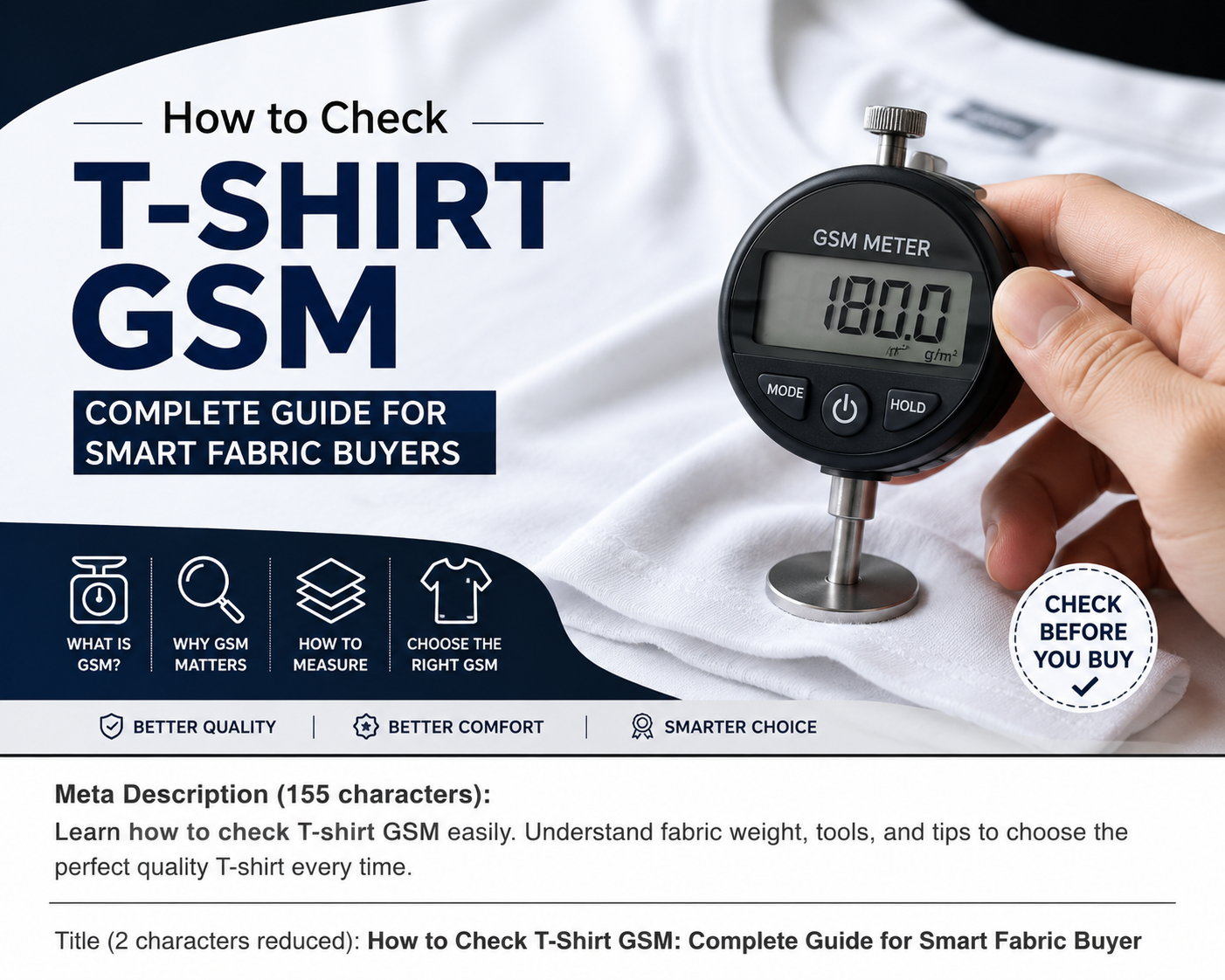
When you pick up a t-shirt, you might notice that some feel light and breezy while others feel thick, sturdy, and premium. That difference almost always comes down to one critical measurement — GSM. Whether you are a retailer, a bulk buyer, or a brand owner in the UAE or across the Middle East, understanding how to check t-shirt GSM can save you money, prevent quality issues, and help you make smarter purchasing decisions.
In this guide, we will walk you through everything you need to know about GSM, why it matters, and the exact methods used to measure it accurately.
What Is GSM in T-Shirts?
GSM stands for Grams per Square Metre. It is the standard unit used in the textile industry to measure the weight and density of a fabric. Simply put, it tells you how much one square metre of that fabric weighs in grams.
A lower GSM means a lighter, thinner fabric. A higher GSM means a heavier, denser fabric. For t-shirts, GSM values typically range from 120 GSM to 220 GSM, although specialty garments can fall outside this range.
Why Does GSM Matter?
GSM is not just a number — it directly affects:
- Durability — Higher GSM fabrics generally last longer through repeated washing and wearing
- Comfort — Lighter fabrics feel cooler, which is especially important in the hot climates of the UAE and the wider Middle East
- Print quality — Heavier fabrics hold screen prints and embroidery better
- Perceived value — Customers associate heavier t-shirts with premium quality
- End-use suitability — A 130 GSM shirt is perfect for summer loungewear, while a 200 GSM shirt works better for workwear or branded uniforms
Also read: What Does GSM Mean for Towels? A Practical Guide for Buyers
Common GSM Ranges for T-Shirts
Before you start measuring, it helps to know what you are looking for. Here is a quick reference guide:
| GSM Range | Category | Best Use |
|—|—|—|
- | 120–150 GSM | Lightweight | Summer wear, events, giveaways |
- | 150–180 GSM | Mid-weight | Everyday casual wear |
- | 180–200 GSM | Heavy-weight | Uniforms, workwear, quality retail |
- | 200 GSM+ | Premium | Luxury brands, long-lasting garments |
For buyers in the Middle East, lightweight fabrics in the 140–160 GSM range are extremely popular for daily wear due to the region’s warm climate, while heavier options are favoured for corporate uniforms and branded merchandise.
How to Check T-Shirt GSM: Step-by-Step Methods
There are several ways to measure the GSM of a t-shirt fabric. Some require professional tools, while others can be done with basic equipment.
Method 1: Using a GSM Cutter and Weighing Scale (Most Accurate)
This is the most reliable and professionally accepted method used by textile manufacturers and quality control teams.
What you need:
- A GSM round cutter (also called a GSM disc cutter)
- A precision weighing scale (accurate to 0.001g)
- A flat cutting surface
Step-by-step process:
- Lay the fabric flat on a smooth, hard surface. Make sure there are no wrinkles or folds.
- Place the GSM cutter on the fabric and press down firmly to cut a precise circular sample. Standard GSM cutters produce a sample with an area of 100 cm² (which is 1/100th of a square metre).
- Weigh the cut sample on your precision scale and record the weight in grams.
- Multiply the weight by 100 to get the GSM value.
Example: If your 100 cm² fabric sample weighs 1.85 grams, then:
1.85 × 100 = 185 GSM
This method is used daily on production floors and in quality control labs across the textile industry. If you are sourcing fabric in bulk or verifying a supplier’s claims, this is the method you should rely on.
Method 2: Using a Ruler, Scissors, and Scale (DIY Method)
If you do not have a GSM cutter available, you can still get a reasonably accurate reading with basic tools.
Steps:
- Cut a 10 cm × 10 cm square of fabric (100 cm²) as precisely as possible using a ruler and sharp scissors.
- Place the cut piece on a precision scale.
- Record the weight in grams.
- Multiply by 100 to calculate the GSM.
This method works well for quick checks but can be slightly less accurate due to irregular cutting. Always cut multiple samples from different areas of the fabric and take an average for a more reliable result.
Method 3: Using an Online GSM Calculator or Mobile App
Several textile apps and online tools allow you to input the weight and dimensions of a fabric sample to calculate GSM automatically. While these are convenient, they are only as accurate as the measurements you feed into them.
These digital tools are useful for students, small business owners, or buyers who need a fast estimate without laboratory equipment.
Method 4: Checking the Fabric Label or Supplier Documentation
This is the simplest method but requires trust in your supplier. Most reputable fabric manufacturers and t-shirt suppliers will clearly state the GSM on:
- Product labels
- Technical data sheets
- Purchase order specifications
- Website product listings
However, always verify supplier claims through physical testing, especially for large bulk orders. In competitive markets, fabric GSM can sometimes be misrepresented, and even small discrepancies across thousands of units can translate into significant quality or cost differences.
Tips for Accurate GSM Testing
To ensure your measurements are consistent and reliable, follow these best practices:
- Always test dry fabric. Moisture adds weight and will give you an inflated GSM reading.
- Cut multiple samples from different parts of the garment — the chest, back, and sleeves — and calculate the average.
- Avoid seams and hems when cutting samples, as they will skew your results.
- Condition the fabric before testing. Textile standards recommend conditioning fabric at 20°C and 65% relative humidity for at least 24 hours before precise measurements.
- Use a calibrated scale. A scale accurate to at least 0.01 grams will give you dependable readings.
What GSM Should You Choose for Your T-Shirts?
The right GSM depends entirely on your intended application and your target market.
For the UAE and Middle East Climate
Given the extreme heat across the Gulf region, 150–170 GSM is generally the sweet spot for everyday t-shirts. These fabrics are light enough to keep wearers comfortable in hot conditions but still substantial enough to hold their shape and print well.
For corporate uniforms, promotional events, or school wear, many businesses in the region opt for 180–200 GSM fabrics to ensure durability and a more professional appearance.
For Export and International Markets
If you are manufacturing t-shirts for export to European or cooler-climate markets, heavier fabrics in the 180–220 GSM range are often expected by buyers.
Also read: What Is GSM for Microfiber Towels? A Complete Guide for Smart Buyers
Final Thoughts
Knowing how to check t-shirt GSM is an essential skill for anyone involved in buying, selling, or manufacturing apparel. Whether you use a professional GSM cutter in a quality control lab or a simple ruler and weighing scale in your warehouse, measuring GSM accurately ensures that you always get — and deliver — exactly what is promised.
At the end of the day, GSM is one of the most honest indicators of fabric quality. In a region like the UAE and the Middle East, where demand for high-quality textiles and customised garments continues to grow rapidly, making informed decisions about fabric weight can set your brand apart from the competition.
If you are sourcing t-shirts or custom garments for your business, always ask your manufacturer for GSM specifications — and always verify them.
Looking for premium quality t-shirts with guaranteed GSM specifications? As a trusted textile manufacturer based in the UAE, we supply garments across the Middle East with full quality documentation. [Contact us today](#) to discuss your requirements.
Discover our Woven Fabric Rolls and find the right fabric for your textile needs.