


If you’ve ever shopped for fabric or placed a bulk textile order, you’ve probably come across the term “GSM.” It appears on product labels, technical specifications, and supplier catalogues — but what does it actually mean? And why does it matter so much when choosing cotton fabric?
Whether you’re a fashion designer in Dubai, a hospitality buyer in Riyadh, or a retailer across the GCC region, understanding cotton GSM can help you make smarter, more cost-effective purchasing decisions. This guide breaks it all down in simple, practical terms.
What Does GSM Stand For?
GSM stands for Grams per Square Metre. It is a standard unit of measurement used in the textile industry to describe the weight and density of a fabric.
In simple terms, GSM tells you how much one square metre of a particular fabric weighs in grams. The higher the number, the heavier and denser the fabric. The lower the number, the lighter and more breathable it is.
This single measurement communicates a great deal about a fabric’s quality, thickness, durability, and suitability for different applications.
Also read: What Does GSM Mean for Towels? A Practical Guide for Buyers
Why Is GSM Important in Cotton Fabric?
GSM is one of the most reliable indicators of fabric quality and performance. It helps buyers, manufacturers, and designers make informed comparisons across different cotton products.
Here’s why it matters:
- Quality control: GSM ensures consistency across production batches
- Product suitability: Different applications require different fabric weights
- Pricing transparency: Heavier fabrics typically cost more due to higher material content
- Customer expectations: Consumers associate heavier cotton with durability and premium feel
For textile manufacturers and procurement teams across the Middle East, specifying GSM in purchase orders eliminates ambiguity and reduces costly mistakes.
How Is Cotton GSM Measured?
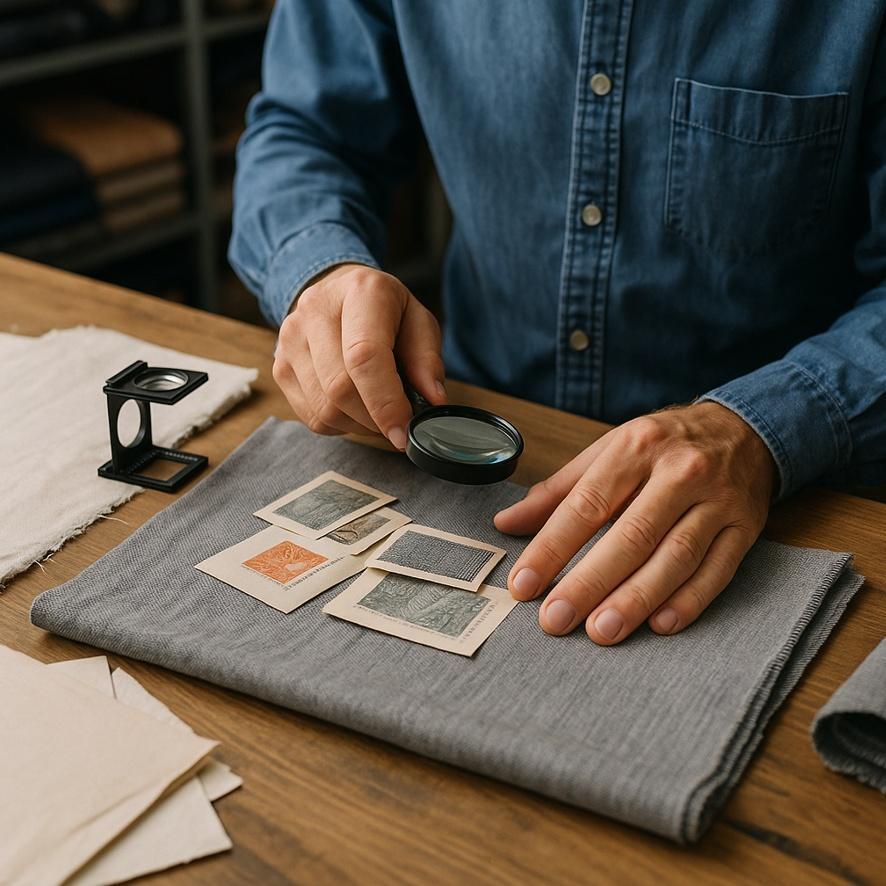
Measuring GSM is a straightforward process. A circular cutter is used to cut a precise sample from the fabric — typically a circle with an area of 100 cm². The sample is then weighed on a precision scale, and the result is multiplied to calculate the GSM for one full square metre.
The Formula
> GSM = (Weight of sample in grams ÷ Area of sample in cm²) × 10,000
Most professional textile labs and manufacturers use calibrated GSM cutters and digital scales to ensure accuracy. This measurement is usually conducted under standard atmospheric conditions to avoid variations caused by humidity — something particularly relevant in the UAE’s climate.
Also read: How to Check T-Shirt GSM: A Complete Guide for Smart Fabric Buyers
What Are the Different Cotton GSM Ranges?
Cotton fabrics are broadly categorised into three weight ranges. Each range has distinct properties and is suited to specific end uses.
Lightweight Cotton (Below 150 GSM)
Lightweight cotton fabrics are thin, breathable, and perfect for hot climates. They feel soft against the skin and allow excellent air circulation.
Common uses:
- Summer clothing and kaftans
- Voile and muslin scarves
- Infant clothing
- Underlining fabrics
This weight range is especially popular in the Gulf region, where temperatures frequently exceed 40°C and lightweight, airy garments are essential.
Medium Weight Cotton (150 GSM to 300 GSM)
This is the most versatile range in the cotton GSM spectrum. Medium-weight cotton strikes a balance between comfort, durability, and structure.
Common uses:
- T-shirts and casual wear
- Bed linens and pillowcases
- Lightweight uniforms
- Curtains and drapes
A standard T-shirt typically falls between 150 and 200 GSM. Premium T-shirts and heavier casual wear often sit between 200 and 250 GSM.
Heavyweight Cotton (Above 300 GSM)
Heavyweight cotton fabrics are thick, sturdy, and highly durable. They hold their shape well and can withstand repeated washing and heavy use.
Common uses:
- Denim and workwear
- Canvas bags and upholstery
- Hotel towels and bathrobes
- Industrial protective clothing
In the hospitality and healthcare sectors across the Middle East, heavyweight cotton is a popular choice for towels, uniforms, and bedding due to its durability and luxurious feel.
Cotton GSM by Product Type: A Quick Reference Guide
- | Product | Typical GSM Range |
- |—|—|
- | Voile / Muslin | 50 – 100 GSM |
- | Summer T-Shirts | 120 – 160 GSM |
- | Standard T-Shirts | 160 – 200 GSM |
- | Premium T-Shirts | 200 – 250 GSM |
- | Bed Sheets | 100 – 200 GSM |
- | Bath Towels | 300 – 600 GSM |
- | Denim Fabric | 300 – 450 GSM |
- | Canvas | 400 – 600 GSM |
Also read: What Is GSM for Microfiber Towels? A Complete Guide for Smart Buyers
Does Higher GSM Always Mean Better Quality?
This is one of the most common misconceptions about cotton GSM. The answer is — not necessarily.
Higher GSM means heavier and denser fabric, which is ideal for certain applications. But a high GSM is not universally superior. A 600 GSM beach towel is perfect for absorbency, but a 600 GSM summer blouse would be unbearably hot to wear.
The right GSM depends entirely on the intended use of the product. A lightweight 120 GSM cotton voile can be of exceptional quality if the yarn count is high and the weave is refined.
When evaluating cotton fabric, always consider GSM alongside other factors such as:
- Thread count (for woven fabrics)
- Yarn quality and origin
- Weave structure (plain, twill, satin, etc.)
- Finishing treatments
How Does GSM Affect Price?
In commercial textile procurement, GSM has a direct relationship with price. Heavier fabrics require more raw material — more cotton yarn — to produce each square metre. This naturally increases the cost per unit.
However, investing in the appropriate GSM for your product can actually save money in the long run. Using a fabric that is too light for a demanding application — such as workwear or hotel linen — will result in faster wear and tear, leading to higher replacement costs.
For businesses across the UAE and wider Middle East sourcing cotton fabrics at scale, it’s worth working closely with your manufacturer to identify the optimal GSM for each product category. This ensures cost efficiency without compromising performance.
Choosing the Right Cotton GSM for Your Market
The Middle East presents a unique set of requirements for cotton fabric buyers. The region’s hot and humid climate, combined with strong demand in hospitality, fashion, healthcare, and retail, means that fabric weight decisions carry real commercial consequences.
Here are a few practical tips for buyers in the region:
- For fashion and apparel: Prioritise lightweight to medium GSM fabrics (100–220 GSM) to keep garments breathable and comfortable year-round
- For hospitality linen: Choose 200–300 GSM for bed sheets and 400–600 GSM for towels to meet guest expectations for softness and durability
- For workwear and uniforms: Opt for medium to heavyweight cotton (250–400 GSM) to ensure longevity in demanding environments
- For retail gifting and packaging: Lightweight cotton bags in the 100–150 GSM range offer a cost-effective, eco-friendly option
Conclusion
Understanding cotton GSM is fundamental to making the right fabric choices — whether you’re sourcing a few hundred metres or placing an industrial-scale order. It’s not just a technical specification; it’s a practical tool that connects product performance to real-world outcomes.
As a textile manufacturer based in the UAE and serving buyers across the Middle East, we work with clients to identify the exact GSM specifications that match their industry requirements, climate conditions, and budget. From lightweight summer fabrics to heavy-duty industrial textiles, getting the GSM right from the start means better products, happier customers, and fewer costly revisions.
Need help choosing the right cotton GSM for your next order? Contact our team today — we’re here to help you source smarter.
Contact us for Fabric Manufacturing in UAE