


If you’ve ever shopped for towels, bed sheets, or fabric and noticed a number followed by “GSM,” you may have wondered what it actually means — and whether a higher number is better. Understanding GSM is essential whether you’re a buyer, a retailer, or a business sourcing textiles across the Middle East. In this guide, we break down exactly what GSM means, why it matters, and how to choose the right GSM for your specific needs.
What Does GSM Stand For?
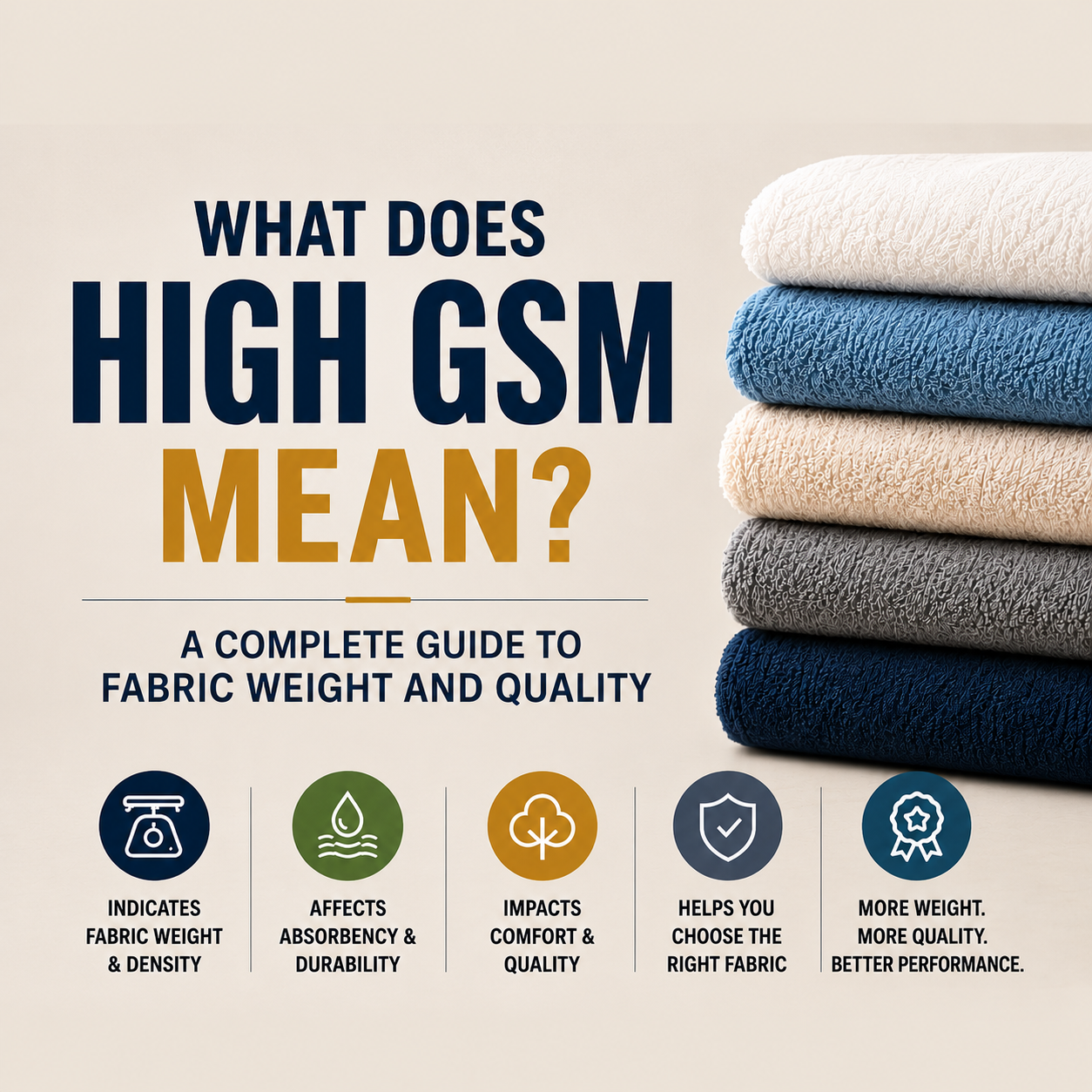
GSM stands for Grams per Square Metre. It is the standard unit of measurement used in the textile industry to describe the weight and density of a fabric. In simple terms, GSM tells you how much one square metre of a particular fabric weighs in grams.
The higher the GSM number, the heavier and denser the fabric. The lower the number, the lighter and more breathable the material.
This measurement applies across a wide range of textiles, including:
- Cotton towels and bathrobes
- Bed linen and sheets
- T-shirts and apparel
- Nonwoven fabrics
- Industrial and medical textiles
What Does High GSM Mean?
A high GSM means the fabric has a greater density and weight per square metre. For most fabric types, a high GSM indicates:
- Thicker material — the fabric has more fibres packed into each square metre
- Greater durability — heavier fabrics tend to withstand more use and washing cycles
- Better absorbency — particularly relevant in towels and bath products
- A more premium feel — high GSM fabrics are often associated with luxury and quality
- Less transparency — heavier fabric is less likely to be see-through
However, “high” is a relative term. What counts as high GSM depends entirely on the type of fabric and its intended use. A high GSM for a bedsheet would be considered low for a bath towel.
Also read: What Does GSM Mean for Towels? A Practical Guide for Buyers
GSM Ranges: What the Numbers Mean
Low GSM (Below 150)
Fabrics in this range are lightweight and breathable. They are ideal for hot climates — including the UAE and the broader Middle East region — where airflow and comfort in warm temperatures are priorities. Common uses include:
- Summer clothing
- Lightweight scarves
- Lining fabrics
Medium GSM (150–350)
This mid-range covers a wide variety of everyday textiles. These fabrics offer a balance between comfort, durability, and breathability. Common uses include:
- T-shirts and casual wear (around 180–200 GSM)
- Bed sheets (200–300 GSM)
- Light towels and face cloths
High GSM (350 and Above)
High GSM fabrics are noticeably heavier and more substantial. In towels, for example, anything above 400 GSM is considered high quality, while luxury towels often fall in the 600–900 GSM range. Common uses include:
- Premium bath towels and hotel towels
- Bathrobes
- Heavy-duty workwear
- Upholstery and furnishing fabrics
Why Does High GSM Matter in Textiles?
It Reflects Quality and Value
For many buyers and procurement managers across the Middle East, GSM is one of the first specifications they look at when evaluating textile quality. A higher GSM typically signals that more raw material — such as cotton — has gone into manufacturing the product, which often translates to a higher retail or wholesale price.
Hotels, spas, hospitals, and hospitality businesses in the region frequently specify a minimum GSM in their procurement requirements to ensure consistent quality standards.
It Affects Performance
GSM directly impacts how a fabric performs in real-world use. A high GSM towel, for example, will:
- Absorb more water per use
- Feel softer and plusher
- Retain its shape and softness after repeated washing
- Last longer before showing signs of wear
This is why five-star hotels across Dubai, Abu Dhabi, and Riyadh invest in high GSM towels and linens — it is a tangible quality indicator that guests can feel.
It Guides Purchasing Decisions
Understanding GSM allows buyers to make informed decisions and compare products accurately. Without this measurement, it’s difficult to determine whether two products with similar appearances are actually equivalent in quality. GSM creates a common language between manufacturers, suppliers, and buyers.
High GSM vs. Low GSM: Which Is Better?
The honest answer is: it depends on the application.
Use Case | Recommended GSM
Summer clothing | 120–180 GSM
Everyday bed sheets | 200–300 GSM
Gym or sports towels | 300–400 GSM
Standard bath towels | 400–550 GSM
Luxury hotel towels | 600–900 GSM
Bathrobes | 300–500 GSM
Upholstery fabric | 300–600 GSM
Choosing the wrong GSM can result in a product that underperforms. For instance, selecting a low GSM towel to reduce costs may seem economical in the short term, but it can lead to faster deterioration, poor customer experience, and higher replacement costs over time.
High GSM in the Middle East Context
The Middle East presents a unique set of textile requirements. The region’s climate, hospitality standards, and consumer preferences all influence which GSM ranges are most in demand.
Hospitality and Luxury Sector
The UAE, Saudi Arabia, Qatar, and Kuwait are home to some of the world’s most prestigious hotels and resorts. These establishments demand high GSM towels, bathrobes, and bed linens to meet international luxury standards. Suppliers serving this sector typically work in the 600–800 GSM range for towels and bath products.
Healthcare and Institutional Use
Hospitals, clinics, and care facilities across the region require fabrics that are durable, hygienic, and withstand frequent industrial washing. Medium to high GSM fabrics in the 300–500 range are commonly specified for this sector.
Climate Considerations
While high GSM is desirable for towels and bedding, the region’s year-round heat means that clothing and outdoor fabrics often favour lower GSM options that allow for better breathability and moisture management.
How to Check the GSM of a Fabric
If you’re sourcing fabric or verifying a supplier’s claims, there are a few ways to confirm GSM:
- Request a technical data sheet — reputable manufacturers will always provide this
- Use a GSM cutter and weighing scale — a standard test used in textile quality control labs
- Ask for third-party lab certification — particularly important for large commercial orders
At a professional textile manufacturing level, GSM is measured using standardised testing methods compliant with international quality standards such as ISO and ASTM.
Also read: How to Check T-Shirt GSM: A Complete Guide for Smart Fabric Buyers
Conclusion: Make GSM Work for Your Business
Understanding what high GSM means gives you a powerful tool for making smarter textile decisions — whether you’re outfitting a luxury hotel in Dubai, supplying a hospital network in Riyadh, or developing a retail product line across the Gulf.
To summarise:
- High GSM = heavier, denser, more durable fabric
- It signals quality, absorbency, and longevity
- The right GSM depends on the end use of the product
- In the Middle East’s hospitality and healthcare sectors, high GSM is often a non-negotiable standard
As a trusted textile manufacturer serving businesses across the UAE and the wider Middle East, we understand that quality is not just a preference — it’s a requirement. Whether you need guidance on fabric specifications or are looking for a reliable supply partner, our team is here to help you source the right fabric at the right GSM for your exact needs.
Get in touch with us today to discuss your textile requirements.
Contact us for Fabric Manufacturing in UAE